Temperature variations affect the performance of dielectric filters through several mechanisms, mainly reflected in the following aspects:
First, center frequency drift.
The dielectric constant of the material changes with temperature, and its temperature coefficient directly causes a shift in the resonant frequency. As temperature increases, variations in the dielectric constant may lead to an upward or downward shift of the filter’s center frequency. If the temperature coefficient is large, frequency stability will be significantly affected over a wide temperature range.
Second, changes in insertion loss and Q factor.
Rising temperature increases dielectric loss and conductor loss, which reduces the quality factor (Q) of the resonator. A lower Q factor results in higher insertion loss and degraded out-of-band rejection, thereby reducing the filter’s selectivity and overall performance.
Third, variations in bandwidth and matching characteristics.
Since resonant parameters and coupling coefficients vary with temperature, the filter’s bandwidth and port matching (return loss) may also change. In high- or low-temperature environments, or under rapid temperature fluctuations, bandwidth shifts or degraded VSWR performance can occur.
Therefore, in practical designs, the impact of temperature on dielectric filter performance is typically mitigated by selecting materials with low temperature coefficients, applying temperature-compensated structural designs, and conducting rigorous temperature testing.
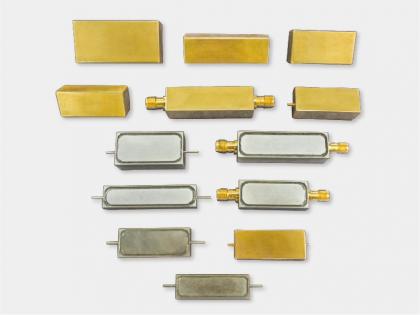
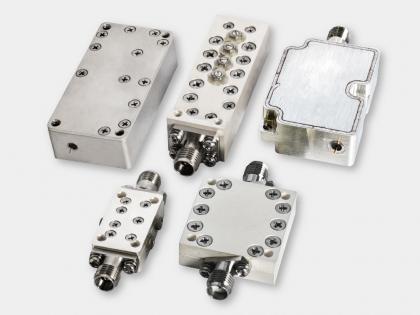
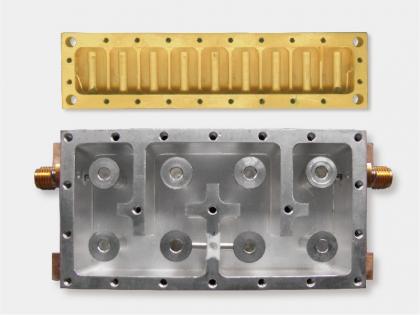
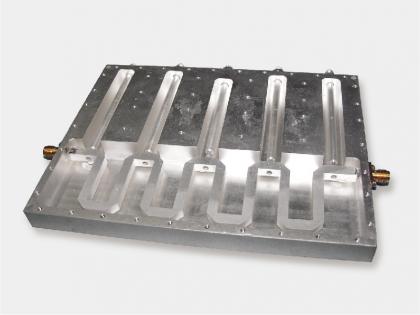
Yun Micro, as the professional manufacturer of rf passive components, can offer the cavity filters up 40GHz,which include band pass filter, low pass filter, high pass filter, band stop filter.
Welcome to contact us: liyong@blmicrowave.com


Address : Xisan Road, Mechanical and Electrical Industrial Park, No.767 Yulan Road, Hefei,Anhui.
Tel : +86-18855146875
Email : liyong@blmicrowave.com


Scan it