
other
  • What Are the Common Applications of LC Filters?
    What Are the Common Applications of LC Filters? Nov 10, 2026
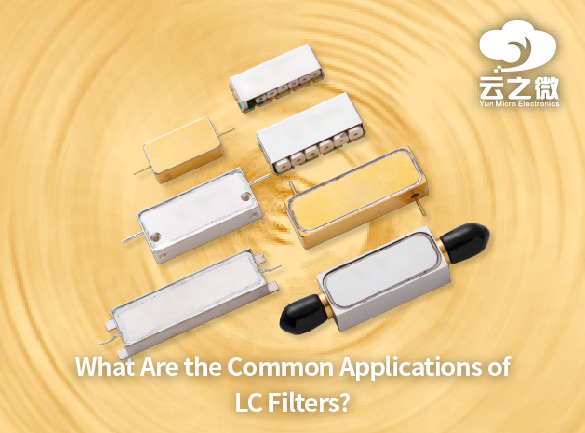
    An LC filter is a passive network built from an inductor (L) and a capacitor (C) that passes a chosen band of frequencies while blocking the rest. In real designs it appears in five areas: wireless and RF front ends, power supply and DC-DC filtering, automotive electronics, industrial automation, and audio equipment. Key takeaways An LC filter is fully passive: no external supply, low cost, small ...
  • How Is the Cutoff Frequency of a Filter Determined?
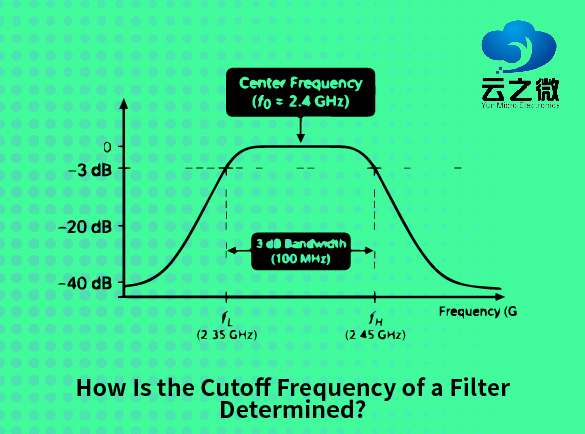
    How Is the Cutoff Frequency of a Filter Determined? Nov 06, 2026
    A filter's cutoff frequency is the point where its response drops 3 dB below the passband reference level. It is fixed by four inputs: the frequency range the application must pass, the passband and stopband edges the system can tolerate, the required 3 dB bandwidth, and the physical design — filter order, resonator type, dielectric material and component values. Key takeaways The 3 dB point is a ...
  • What is the Quality Factor (Q Factor) of a Filter?
    What is the Quality Factor (Q Factor) of a Filter? Nov 05, 2026
    When an engineer sends us a filter requirement, the conversation rarely starts with the quality factor. It starts with the center frequency, the bandwidth, the rejection targets. But within a few emails, the Q factor ends up deciding most of the design, because it sets how sharply a filter can separate the passband from everything around it, and how much signal you lose getting through. This artic...
  • How to Choose the Right Bandpass Filter for RF and Microwave Applications Sep 17, 2026
    Quick Answer: To choose the right bandpass filter for RF and microwave applications, first define your exact center frequency (f0) and required passband bandwidth. Next, evaluate critical performance metrics such as insertion loss (to maintain signal strength), return loss / VSWR, and out-of-band rejection (to eliminate interference). Finally, select the appropriate filter technology—such as cavit...
  • Standard vs Customized Filters: Which One Is Right for Your Project?
    Standard vs Customized Filters: Which One Is Right for Your Project? Jun 02, 2026
    When working on electronic signal processing, communication systems, or audio equipment projects, choosing between standard filters and custom filters depends on specific technical requirements, budget constraints, and performance needs. Here’s a comparative analysis of the two options: 1. Standard Filters (Off-the-Shelf Filters) Ideal for:General signal processing needs, such as routine filtering...
  • What effects do temperature changes have on the performance of cavity filters?
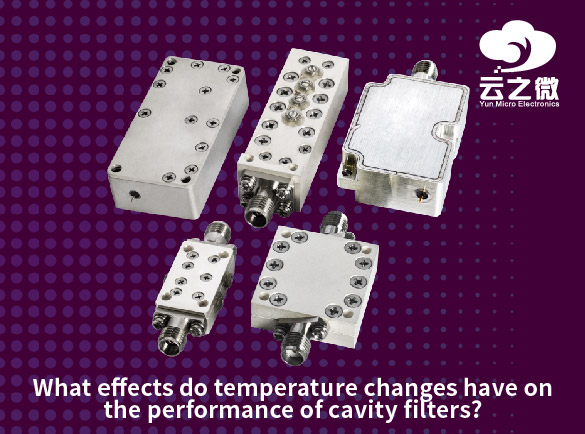
    What effects do temperature changes have on the performance of cavity filters? May 29, 2026
    Temperature changes can significantly affect the performance of cavity filters, mainly in terms of center frequency drift, insertion loss variation, and reduced stability. Since the metal materials in cavity filters expand or contract with temperature changes, slight dimensional variations occur, leading to shifts in resonant frequency. When the temperature rises, the center frequency may decrease...
  • Where are filter banks commonly used?
    Where are filter banks commonly used? May 26, 2026
    Filter banks are typically composed of multiple filters with different frequencies or functions and are widely used in communications, electronic devices, power systems, and testing instruments. Their main purpose is to enable multi-band signal selection, noise suppression, and frequency management. In wireless communications and base station systems, filter banks can process multiple frequency ba...
  • What is the difference between active filters and passive filters?
    What is the difference between active filters and passive filters? May 22, 2026
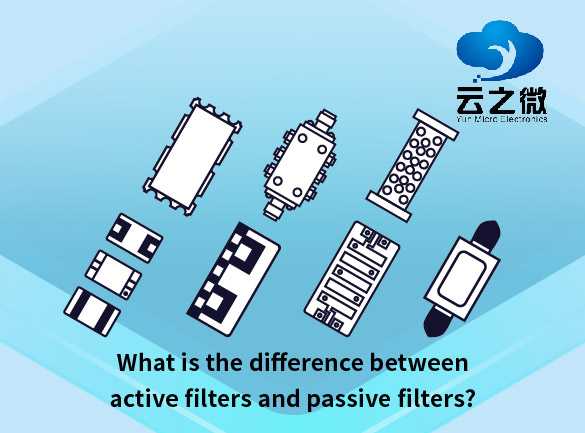
    The main difference between active filters and passive filters lies in whether they require an external power supply and the components they use. Active filters consist of operational amplifiers, transistors, resistors, and capacitors, and require external power. They can not only filter signals but also provide amplification, making them suitable for audio processing, low-frequency signal conditi...
  • What are the differences in the working principles between dielectric filters and LC filters?
    What are the differences in the working principles between dielectric filters and LC filters? May 19, 2026
    The main difference between dielectric filters and LC filters lies in their resonance mechanism and structural design. Dielectric filters use high-dielectric-constant ceramic materials to form dielectric resonant cavities. Electromagnetic fields resonate inside the dielectric material to selectively pass or suppress specific frequencies, offering high Q value, low insertion loss, and strong power ...
  • What is a dielectric filter? What is its basic working principle?
    What is a dielectric filter? What is its basic working principle? May 12, 2026
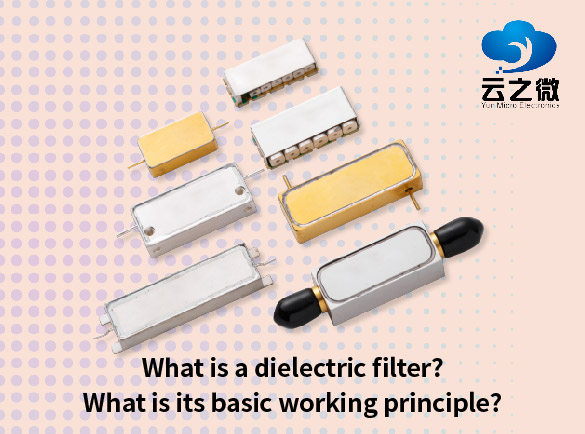
    Definition A dielectric filter is an RF filter that uses high dielectric constant ceramic materials to achieve signal frequency selection. It is widely used in wireless communications, base stations, satellite communications, and IoT devices. Compared with traditional LC filters, dielectric filters offer compact size, high Q value, and excellent frequency stability. Working Principle Its basic wor...
1 2 3

A total of 3 pages

Subscribe to Our Newsletter
Sign up to our newsletter for the Microwaves & RF.

Leave A Message

Leave A Message
If you are interested in our products and want to know more details,please leave a message here,we will reply you as soon as we can.

Home

Products

skype