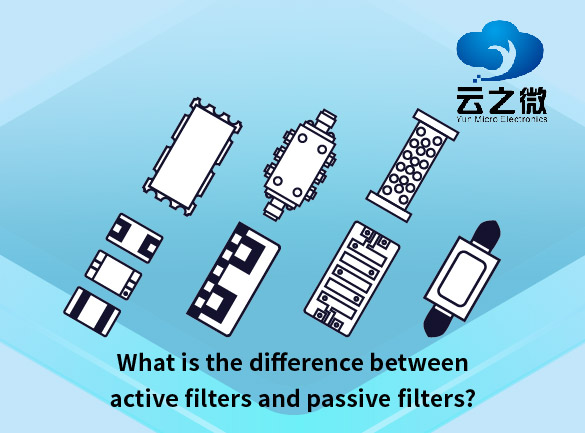




The main difference between active filters and passive filters lies in whether they require an external power supply and the components they use. Active filters consist of operational amplifiers, transistors, resistors, and capacitors, and require external power. They can not only filter signals but also provide amplification, making them suitable for audio processing, low-frequency signal conditi...
Filter banks are typically composed of multiple filters with different frequencies or functions and are widely used in communications, electronic devices, power systems, and testing instruments. Their main purpose is to enable multi-band signal selection, noise suppression, and frequency management. In wireless communications and base station systems, filter banks can process multiple frequency ba...
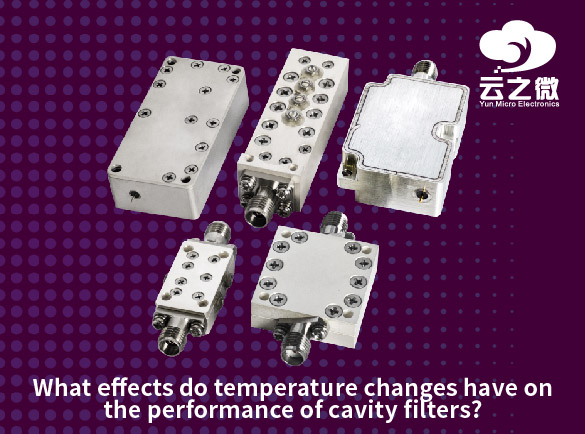
Temperature changes can significantly affect the performance of cavity filters, mainly in terms of center frequency drift, insertion loss variation, and reduced stability. Since the metal materials in cavity filters expand or contract with temperature changes, slight dimensional variations occur, leading to shifts in resonant frequency. When the temperature rises, the center frequency may decrease...
When working on electronic signal processing, communication systems, or audio equipment projects, choosing between standard filters and custom filters depends on specific technical requirements, budget constraints, and performance needs. Here’s a comparative analysis of the two options: 1. Standard Filters (Off-the-Shelf Filters) Ideal for:General signal processing needs, such as routine filtering...