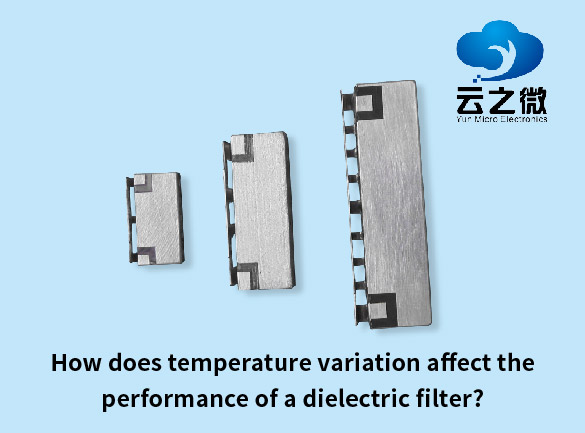
Temperature variations affect the performance of dielectric filters through several mechanisms, mainly reflected in the following aspects: First, center frequency drift. The dielectric constant of the material changes with temperature, and its temperature coefficient directly causes a shift in the resonant frequency. As temperature increases, variations in the dielectric constant may lead to an upward or downward shift of the filter’s center frequency. If the temperature coefficient is large, frequency stability will be significantly affected over a wide temperature range. Second, changes in insertion loss and Q factor. Rising temperature increases dielectric loss and conductor loss, which reduces the quality factor (Q) of the resonator. A lower Q factor results in higher insertion loss and degraded out-of-band rejection, thereby reducing the filter’s selectivity and overall performance. Third, variations in bandwidth and matching characteristics. Since resonant parameters and coupling coefficients vary with temperature, the filter’s bandwidth and port matching (return loss) may also change. In high- or low-temperature environments, or under rapid temperature fluctuations, bandwidth shifts or degraded VSWR performance can occur. Therefore, in practical designs, the impact of temperature on dielectric filter performance is typically mitigated by selecting materials with low temperature coefficients, applying temperature-compensated structural designs, and conducting rigorous temperature testing. Yun Micro, as the professional manufacturer of rf passive components, can offer the cavity filters up 40GHz,which include band pass filter, low pass filter, high pass filter, band stop filter. Welcome to contact us: liyong@blmicrowave.com
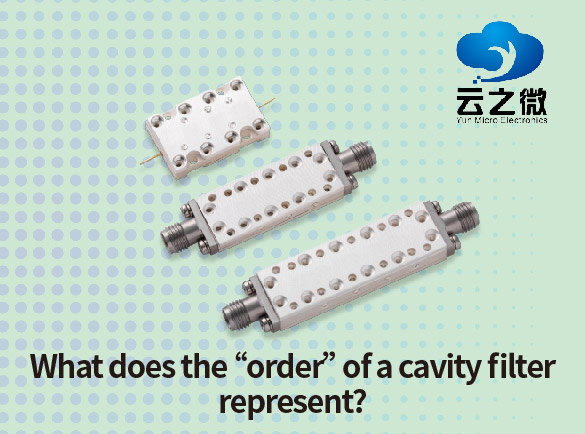
The “order” of a cavity filter typically refers to the number of resonant cavities (resonant elements) in the filter. It is a key parameter that reflects the structural complexity and electrical performance of the filter. Each resonant cavity corresponds to one pole; therefore, a higher order enables stronger frequency selectivity. From a performance perspective, the order directly affects selectivity and out-of-band rejection. Higher-order cavity filters can achieve steeper roll-off characteristics between the passband and stopband, as well as significantly improved suppression of adjacent-channel and far-out interference. For this reason, they are commonly used in communication systems with stringent spectral isolation requirements. However, increasing the order involves trade-offs. Insertion loss, physical size, weight, and tuning difficulty generally increase with higher order. In addition, tighter manufacturing tolerances and higher costs are required. Consequently, in practical designs, an appropriate filter order is selected by balancing performance requirements against size, complexity, and cost constraints. Yun Micro, as the professional manufacturer of rf passive components, can offer the cavity filters up 40GHz,which include band pass filter, low pass filter, high pass filter, band stop filter. Welcome to contact us: liyong@blmicrowave.com
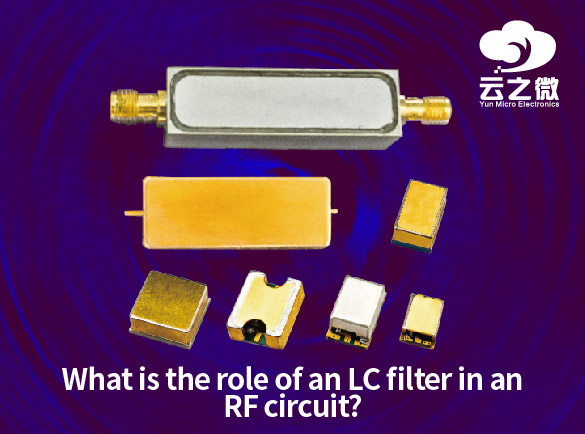
LC filters in RF circuits are primarily used to selectively pass desired frequencies, suppress unwanted signals, and enhance overall system performance. First, by leveraging the resonant behavior of inductors (L) and capacitors (C), the filter establishes specific passbands or stopbands, effectively removing undesired high-frequency or low-frequency components and improving signal purity. In RF front-end architectures, LC filters are commonly implemented as band-pass, low-pass, or high-pass networks to suppress spurious signals, harmonics, and adjacent-channel interference. This helps the receiver accurately capture the target signal while also reducing out-of-band emissions generated by power amplifiers, ensuring compliance with RF regulatory requirements. Because LC filters offer low insertion loss and high Q-factor characteristics, they maintain minimal signal attenuation and improve system sensitivity and signal-to-noise ratio. With advantages such as simple structure, strong tunability, and low cost, LC filters are widely used in wireless communication systems, IoT devices, and various RF modules. Yun Micro, as the professional manufacturer of rf passive components, can offer the cavity filters up 40GHz,which include band pass filter, low pass filter, high pass filter, band stop filter. Welcome to contact us: liyong@blmicrowave.com
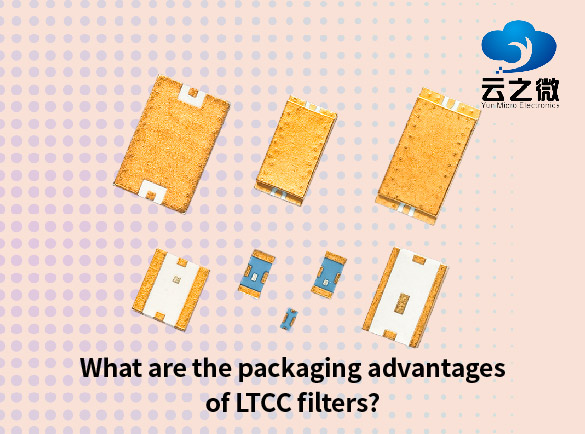
LTCC (Low Temperature Co-fired Ceramic) filters offer significant advantages in packaging, primarily due to their high level of integration. The LTCC process allows inductors, capacitors, vias, and shielding structures to be co-fired within multilayer ceramics, enabling three-dimensional integration of passive components. This greatly reduces the need for external parts and results in a smaller and more compact filter structure. Secondly, LTCC provides excellent thermal stability and mechanical reliability. Ceramic materials have a low thermal expansion coefficient and strong resistance to high temperature and humidity. After packaging, the filter can operate stably under high power density and harsh environments, making it suitable for applications such as 5G and radar that require strong temperature stability. Lastly, the LTCC packaging process supports effective electromagnetic shielding. Internal grounding layers and metal shielding structures can be incorporated to suppress parasitic coupling and external interference, improving the filter’s Q-factor and overall performance. In addition, LTCC is compatible with standard SMT packages, enabling mass production, automated assembly, lower costs, and high consistency. Yun Micro, as the professional manufacturer of rf passive components, can offer the cavity filters up 40GHz,which include band pass filter, low pass filter, high pass filter, band stop filter. Welcome to contact us: liyong@blmicrowave.com
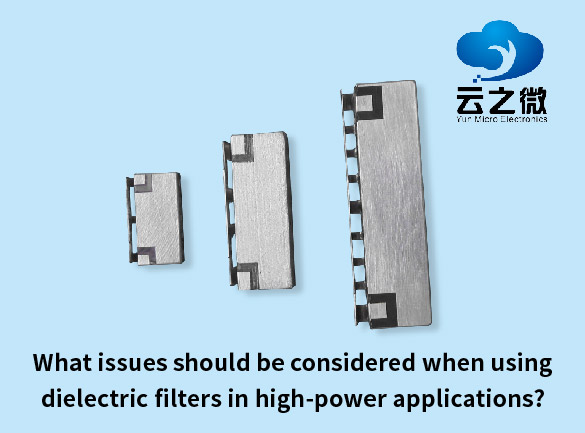
When using dielectric filters in high-power applications, several key issues must be considered. First, high-power signals generate significant dielectric loss inside the material, leading to temperature rise. If heat dissipation is insufficient, it may cause resonance frequency drift or even device failure. Therefore, low-loss dielectric materials should be selected, and thermal performance can be improved through metal housings, heat sinks, or thermal-conductive structures. Second, higher power results in stronger electric fields inside the resonator, increasing the risk of dielectric breakdown or surface discharge. To avoid this, the dielectric block surface should be smooth and free of sharp edges, and the resonator geometry should be optimized to reduce local field concentration. Finally, temperature variations under high power may cause shifts in the dielectric constant, leading to instability in the filter’s center frequency. Choosing materials with low temperature coefficients and incorporating frequency-compensation measures in the design can improve long-term reliability. Overall, in high-power scenarios, appropriate material selection, thermal management, and structural optimization are essential to ensure stable operation of dielectric filters. Yun Micro, as the professional manufacturer of rf passive components, can offer the cavity filters up 40GHz,which include band pass filter, low pass filter, high pass filter, band stop filter. Welcome to contact us: liyong@blmicrowave.com
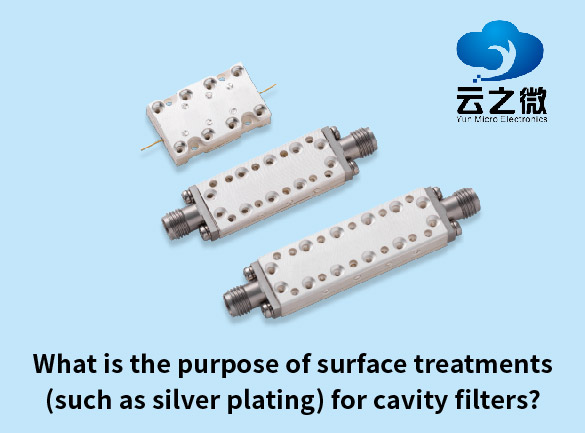
Surface treatments for cavity filters—such as silver plating—primarily enhance electrical performance, reduce losses, and improve environmental durability. Their functions can be summarized as follows: First, silver plating significantly reduces conductive loss on the inner walls of the cavity. Silver has one of the highest electrical conductivities among common metals. After the cavity walls are plated with silver, the surface current experiences lower resistance during electromagnetic energy transmission, thereby reducing insertion loss and increasing the filter’s Q-factor and overall frequency performance. Second, silver plating helps improve the frequency stability of the cavity filter. With reduced surface roughness, the electromagnetic field distribution becomes more uniform, minimizing frequency drift caused by surface irregularities. This leads to more stable performance in high-frequency and microwave applications. Finally, silver plating enhances oxidation and corrosion resistance. Bare copper or aluminum surfaces oxidize easily, degrading conductivity and long-term reliability. A silver-plated surface provides protection, ensuring that the filter remains stable and reliable under varying humidity, temperature, and long-term operating conditions. Yun Micro, as the professional manufacturer of rf passive components, can offer the cavity filters up 40GHz,which include band pass filter, low pass filter, high pass filter, band stop filter. Welcome to contact us: liyong@blmicrowave.com
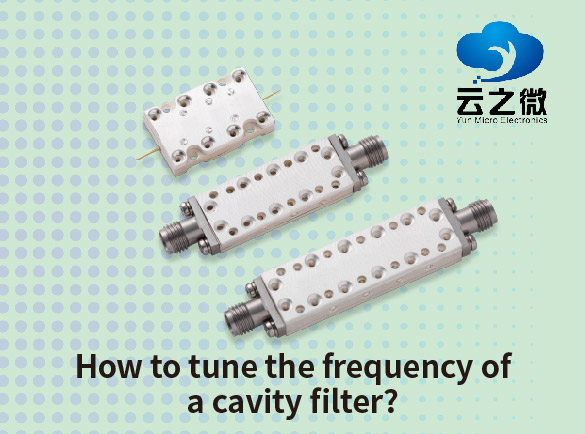
The frequency tuning of a cavity filter is mainly achieved by adjusting the electromagnetic field distribution inside the resonant cavity. The most common method is using tuning screws installed on the top or side of the cavity. By screwing them in or out, the effective electrical length or capacitance changes, causing the resonant frequency to increase or decrease. A deeper screw penetration compresses the electromagnetic field, increases the equivalent capacitance, and typically lowers the center frequency. Another method uses metal or dielectric tuning plates. By adjusting the position or spacing of these plates, small changes can be made to the local electric and magnetic fields, enabling fine frequency compensation. This approach is often used for precise tuning or temperature compensation. In addition, some cavity filters support mechanical deformation tuning, such as slightly adjusting the cavity size (top cover movement or sidewall fine adjustment) to alter the effective length or volume of the resonant cavity, allowing for wider tuning ranges. During tuning, a vector network analyzer is typically used to monitor S-parameters to ensure that the frequency, bandwidth, and insertion loss meet the required specifications. Yun Micro, as the professional manufacturer of rf passive components, can offer the cavity filters up 40GHz,which include band pass filter, low pass filter, high pass filter, band stop filter. Welcome to contact us: liyong@blmicrowave.com
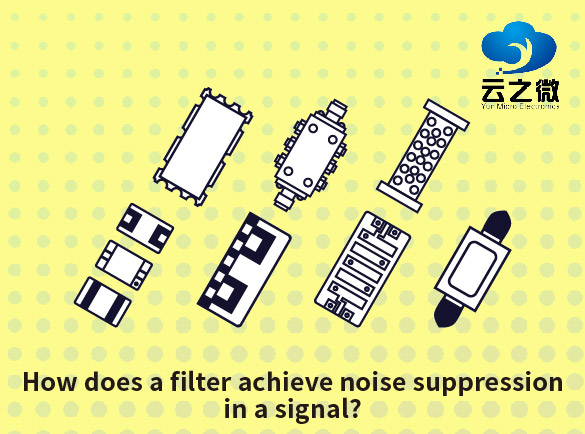
Filters suppress noise by selectively preserving desired frequency components while attenuating irrelevant or interfering ones. Many types of noise are concentrated in specific frequency ranges, such as high-frequency spikes or low-frequency drift. Based on the filter type—low-pass, high-pass, band-pass, or band-stop—the gain is controlled across different frequencies so that noise is significantly reduced during transmission. Secondly, filters use the frequency-selective characteristics of inductors, capacitors, or dielectric resonator structures. These components provide low loss within the operating bandwidth and high attenuation where noise is present. As a result, the main energy of the signal is maintained, while noise outside the passband is effectively suppressed. Finally, some filters enhance noise reduction through a higher Q-factor or multistage design, achieving steeper roll-off and reducing out-of-band leakage. Overall, filters achieve noise suppression by “allowing only the desired frequencies to pass while blocking the undesired ones.” Yun Micro, as the professional manufacturer of rf passive components, can offer the cavity filters up 40GHz,which include band pass filter, low pass filter, high pass filter, band stop filter. Welcome to contact us: liyong@blmicrowave.com